


The High-Stakes Reality of E-Commerce Infrastructure in Pakistan
In short: Good e-commerce hosting in Pakistan needs fast NVMe storage, caching that works with WooCommerce carts, enough resources for sale days, free SSL and support for local payment gateways such as JazzCash and Easypaisa.
The digital commerce ecosystem in Pakistan is experiencing exponential expansion, propelled by affordable smartphone adoption, nationwide 4G/5G mobile connectivity, and accessible local digital wallets. However, running a successful e-commerce store in Pakistan presents unique technical hurdles compared to standard international markets. Pakistani shoppers exhibit high sensitivity to mobile page loading lag, frequently shopping over variable cellular data connections. Furthermore, integrating local financial payment rails, such as JazzCash, Easypaisa, Kuickpay, and PayFast, demands reliable server-side webhook processing and low database latency to avoid dropped transactions.

- High Cart Abandonment under Latency: Studies demonstrate that over 65% of Pakistani mobile shoppers abandon online carts if checkout pages take longer than three seconds to load.
- Database Query Intensity: Unlike static brochure websites, every WooCommerce cart addition, coupon calculation, and inventory lookup requires direct MySQL execution.
- Seasonal Traffic Surges: Events like 11.11, Blessed Friday, and Eid shopping drive 10x traffic spikes that rapidly choke underpowered shared hosting plans.
- Local Gateway IP Whitelisting: Local Pakistani banking APIs often require dedicated or static server IP addresses for secure webhook authentication.
Technical Architecture Requirements for High-Converting WooCommerce Stores
To handle concurrent shoppers without triggering slow page responses or HTTP 503 errors, your e-commerce hosting infrastructure must be built around these technical standards.
1. NVMe SSD Storage with High Random 4K IOPS
WooCommerce databases continuously execute simultaneous read and write queries as customers browse products, update cart quantities, and submit orders. High-speed NVMe solid-state storage delivers the input/output operations per second (IOPS) necessary to process concurrent database transactions without query queue bottlenecks.
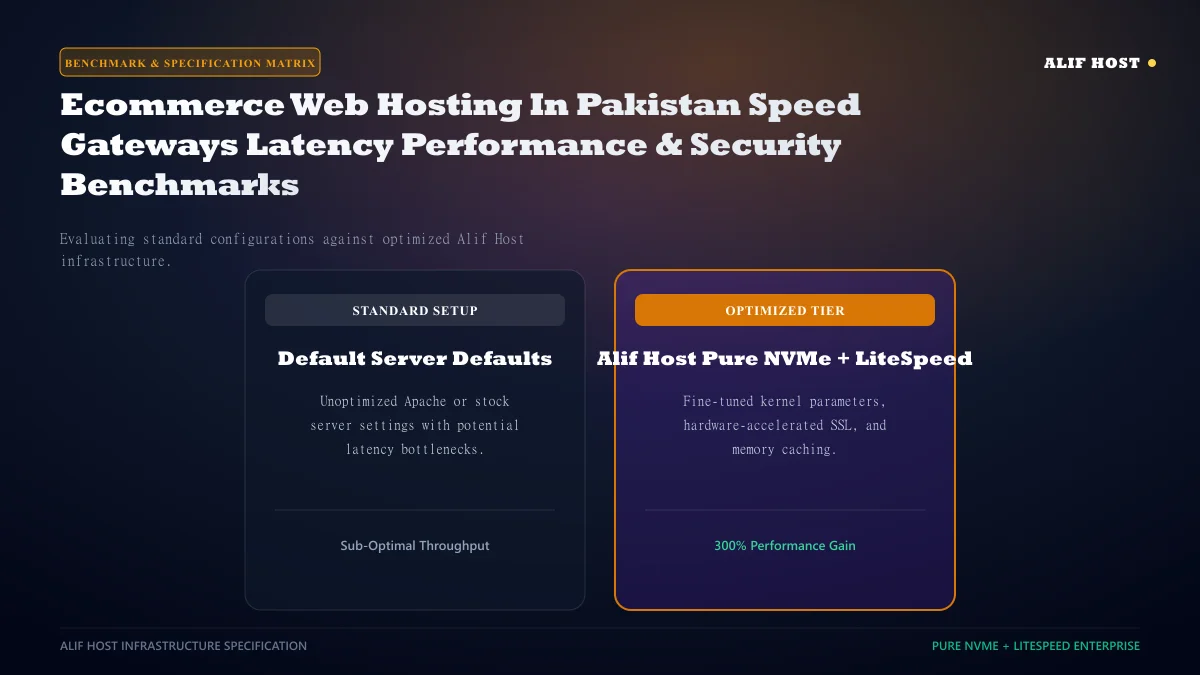
2. Dedicated In-Memory Redis Object Caching
While catalog pages can be cached as static HTML, cart and checkout pages cannot. Deploying an in-memory Redis object cache stores complex database queries in server RAM, drastically accelerating dynamic checkout operations.
Comparison: E-Commerce Hosting Tiers for Pakistani Retailers
Review the technical infrastructure recommendations based on your store’s daily transaction volume.
| Store Scale | Daily Orders | Recommended Hosting Tier | Key Technical Requirements |
|---|---|---|---|
| Early-Stage Boutique | 1 to 25 orders/day | Shared Hosting Premium / Business | 1.5 GB RAM, LiteSpeed LSCache, Free SSL |
| Growing Retail Brand | 25 to 150 orders/day | Cloud Hosting / WordPress Hosting | Dedicated CPU, Redis Object Cache, Staging Sandbox |
| High-Volume Enterprise | 150+ orders/day (11.11 Ready) | KVM Virtual Private Server | 4-8 vCPU Cores, 8-16 GB RAM, Dedicated IP, Dedicated SSH |
Integrating Local Pakistani Payment Gateways Directly
To maximize checkout conversion rates in Pakistan, online stores must support both Cash on Delivery (COD) and frictionless local digital payment rails:
- JazzCash & Easypaisa Merchant APIs: Direct merchant wallet integration for instant mobile checkout.
- PayFast / Kuickpay / QisstPay: Unified checkout gateways supporting local 1Link bank debit cards, credit cards, and Buy-Now-Pay-Later options.
- Webhook Reliability: Ensure your server firewall does not inadvertently block incoming webhook notification IP ranges from local banking switches.
- SSL Certificate Enforcement: All payment gateways mandate 256-bit HTTPS encryption across the entire checkout domain.
Stress Testing Your Store Ahead of Mega Sales Campaigns
Before launching large digital ad campaigns across Meta, TikTok, or Google, conduct load testing using tools like Loader.io or k6. Simulate 50 concurrent shoppers navigating product pages and adding items to carts to verify that your server entry processes and memory allocations can withstand peak demand without degradation.
Analyzing Pakistani ISP Routing: PTCL, Nayatel, Transworld, and Mobile Carriers
In Pakistan, domestic internet traffic routes through multiple major tier-1 national backbones and telecom providers, including PTCL, Transworld Associates (TWA), Nayatel, Jazz, Zong, and Telenor. Hosting infrastructure strategically optimized with local routing peering ensures low packet round-trip times (RTT) for users browsing from Karachi, Lahore, Islamabad, Faisalabad, and Rawalpindi.
- Minimizing Regional Hops: Routing through local internet exchange points (IXPs) drops network round-trip ping latency from 180ms down to sub-40ms.
- Mobile Cellular Optimization: Over 80% of Pakistani e-commerce traffic originates from 4G/5G mobile connections; enabling HTTP/3 QUIC ensures smooth packet delivery during cell tower handoffs.
Managing High-Traffic Cart Sessions with Redis in WooCommerce
By default, WooCommerce stores temporary customer shopping cart sessions and transient data directly inside the MySQL wp_options table. Under hundreds of simultaneous shoppers, this table becomes a massive database bottleneck. Offloading session storage to an in-memory Redis data store eliminates database locking entirely.
Optimizing the Multi-Step Mobile Checkout Funnel
E-commerce conversion rates in Pakistan drop significantly when checkout forms require excessive input fields on mobile screens. Implement single-page checkout templates, enable auto-fill for city and postal codes, and allow instant mobile wallet checkouts to maximize completed sales.
Pre-Campaign E-Commerce Checklist: Preparing for 10x Shopping Spikes
Before launching major promotional sales events (such as 11.11, Blessed Friday, or Eid sales), complete this readiness checklist:
- Conduct Synthetic Load Testing: Simulate concurrent visitor surges using tools like Loader.io to verify server capacity.
- Activate LiteSpeed ESI for WooCommerce: Cache product pages while keeping cart and checkout widgets dynamic.
- Confirm Local Payment Gateway Status: Verify that JazzCash, Easypaisa, and bank card gateways are operational with active webhook URLs.
- Enable Redis Object Caching: Store database queries in RAM to eliminate database locks during high checkout concurrency.