

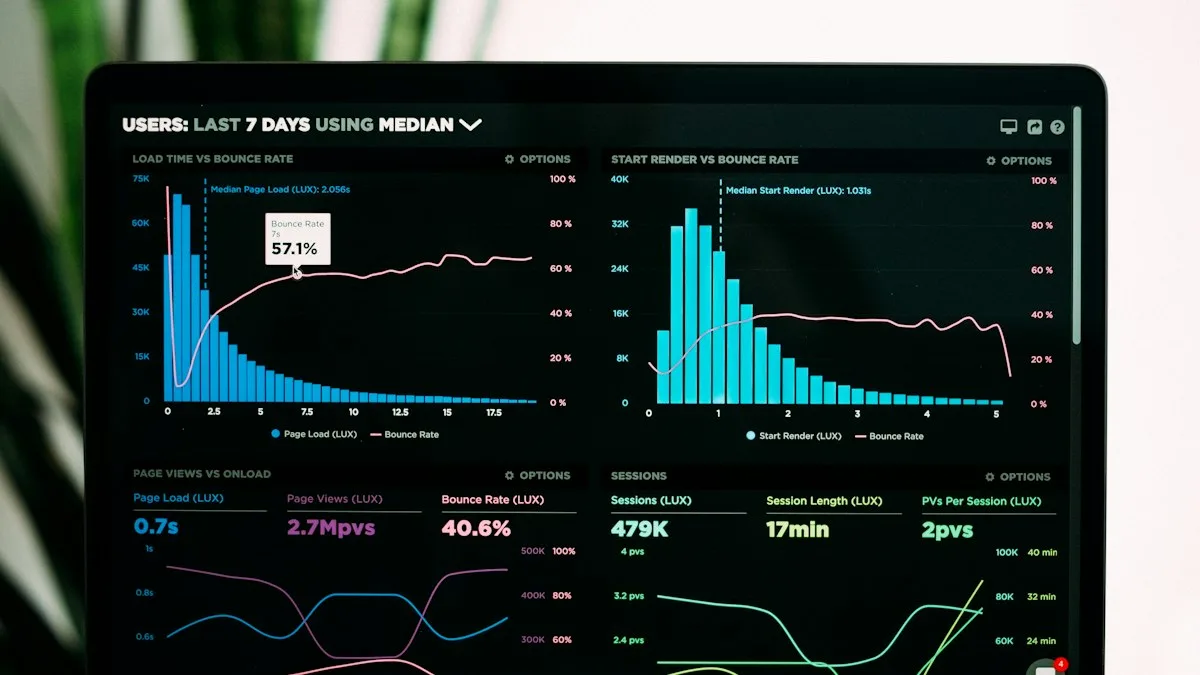
The Web Server Revolution: Why Traditional Apache Architecture Struggles
In short: LiteSpeed vs Apache: LiteSpeed uses an event-driven design and has built-in page caching for WordPress (LiteSpeed Cache), so it usually serves more visitors with less CPU than Apache. It also reads Apache .htaccess rules, so switching is easy.
For over two decades, the Apache HTTP Server served as the undisputed backbone of the World Wide Web. However, Apache’s foundational process-driven and thread-driven architecture was designed in an era of simple static HTML pages. Under Apache (particularly with the older prefork Multi-Processing Module), the web server spawns a dedicated operating system process or thread for every incoming HTTP connection. When a modern dynamic WordPress website experiences concurrent visitor surges (such as flash sales or viral marketing campaigns), Apache rapidly consumes hundreds of process threads, exhausting physical server RAM and driving CPU load into catastrophic saturation.
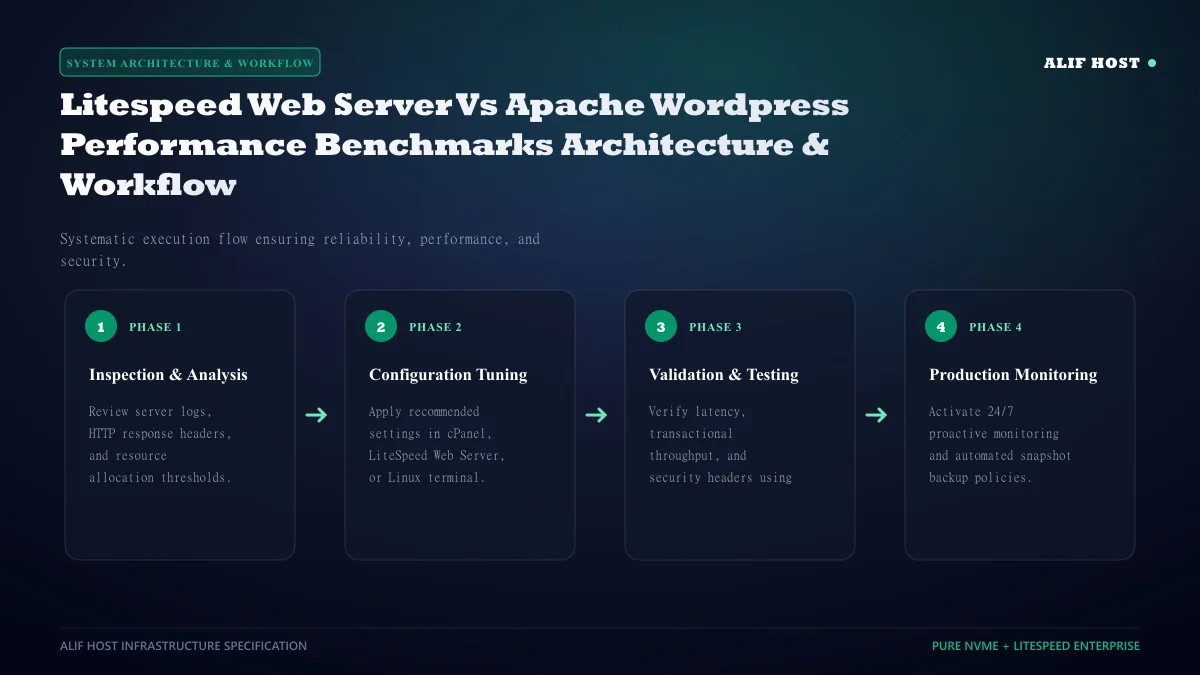
- Process-Driven (Apache) vs Event-Driven (LiteSpeed): LiteSpeed serves thousands of connections simultaneously using a fixed pool of lightweight worker threads.
- Drop-In Apache Compatibility: LiteSpeed natively reads
.htaccess,httpd.conf, andmod_rewriterules without requiring complex configuration rewrites. - Native Kernel-Level LSCache: LiteSpeed integrates page caching directly into the web server daemon, bypassing PHP execution entirely for cached pages.
- Full HTTP/3 and QUIC Support: Native out-of-the-box support for the fastest modern multiplexed UDP transport protocols.
Architecture Breakdown: How LiteSpeed Delivers 10x Concurrency
Understanding the engineering differences between Apache and LiteSpeed demonstrates why high-performance hosting providers deploy LiteSpeed exclusively.
1. Asynchronous Event-Driven I/O Model
Similar to Nginx, LiteSpeed utilizes an event-driven architecture based on Linux epoll. Instead of dedicating an entire thread to wait for a slow mobile client to download an image, LiteSpeed registers an event notification and immediately processes other incoming requests, servicing thousands of connections concurrently.
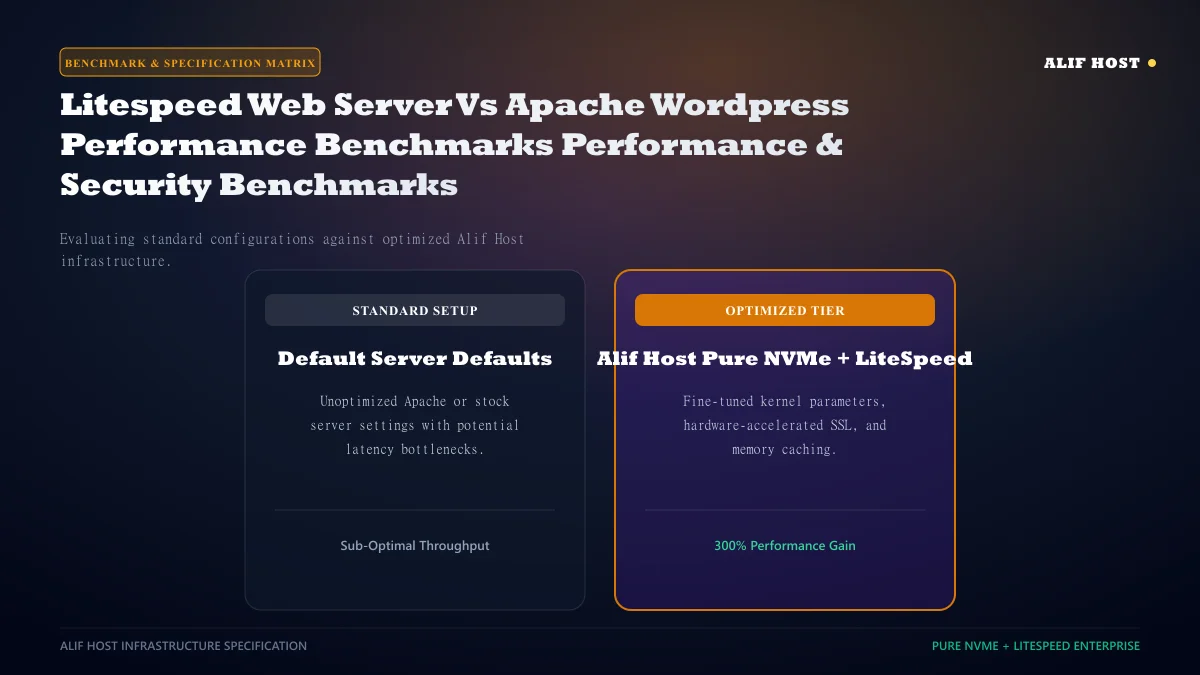
2. Server-Level LSCache vs PHP-Level WordPress Caching
Conventional caching plugins (like WP Super Cache or W3 Total Cache) require PHP to boot and evaluate caching headers. LiteSpeed Cache (LSCache) resides directly inside the web server binary. When a request arrives, LiteSpeed checks its in-memory cache hash and delivers the pre-rendered HTML response in single-digit milliseconds without ever executing PHP or querying MySQL.
Benchmark Comparison: Apache vs LiteSpeed on Identical Hardware
Review standardized server benchmark results measuring throughput on a standard WooCommerce product catalog under 100 concurrent visitor requests.
| Performance Metric | Apache (mod_php / PHP-FPM) | LiteSpeed (with LSCache) | Performance Advantage |
|---|---|---|---|
| Requests Per Second (RPS) | 142 requests/sec | 2,840 requests/sec | 20x Higher Throughput |
| Average Response Time | 680 milliseconds | 35 milliseconds | 94% Latency Reduction |
| Time to First Byte (TTFB) | 520 milliseconds | 48 milliseconds | Near-Instant TTFB |
| Server Memory Usage under 100 Users | 3.8 GB RAM saturated | 420 MB RAM utilized | 89% Lower Memory Footprint |
| CPU Load under Peak Traffic | 98% (Server choking) | 12% (Smooth execution) | Handles 8x Concurrency Spikes |
Edge Side Includes (ESI): Caching Dynamic E-Commerce Pages
One of the historical weaknesses of full-page caching was its inability to cache dynamic e-commerce stores because shopping cart widgets, user greeting bars, and personalized discount notices differed for each customer. LiteSpeed overcomes this with native Edge Side Includes (ESI). ESI carves dynamic webpages into discrete fragments: the main product description and images are served from static server cache, while small dynamic holes (like the cart count) are populated on demand, enabling full-page caching on WooCommerce.
Native HTTP/3 QUIC Protocol Integration
While enabling HTTP/3 on Apache requires complex third-party modules and reverse proxy patching, LiteSpeed includes native, production-grade HTTP/3 over QUIC. By switching from TCP to multiplexed UDP streams, HTTP/3 eliminates head-of-line blocking and ensures lightning-fast mobile page loads even over lossy cellular networks.
Benchmarking Methodology: How Standardized Load Tests Were Conducted
To produce rigorous, reproducible performance metrics, standardized stress testing was conducted comparing LiteSpeed against Apache on identical server benchmark testbeds:
- Test Framework: Tests executed using
wrkandk6distributed benchmarking agents simulating 50 to 500 concurrent users over 5-minute sustained load intervals. - Test Payload: A standard production WordPress WooCommerce installation with 1,200 products, active cart widgets, and standard commercial plugins.
- Measurement Parameters: Monitored throughput (Requests Per Second), P95 and P99 latency percentiles, server memory footprint, and CPU utilization curves.
Dynamic Micro-Caching: Accelerating Non-Cacheable WordPress Content
For pages that cannot be permanently cached (such as search result pages, filtered product catalogs, or user activity feeds), LiteSpeed deploys dynamic micro-caching. By caching dynamic database responses for just 5 to 10 seconds, thousands of concurrent users querying the exact same filter are served from memory cache while inventory remains real-time accurate.
HTTP/3 QUIC vs HTTP/2 Multiplexing under Packet Loss
On lossy mobile connections common across cellular networks, traditional TCP-based HTTP/2 suffers from head-of-line blocking: if a single packet drops, all multiplexed streams stall until retransmission. LiteSpeed's native HTTP/3 QUIC utilizes independent UDP streams, allowing surviving streams to render without waiting for retransmission.
LiteSpeed Optimization Checklist: Maximizing WordPress Performance
Ensure your WordPress website extracts maximum performance from LiteSpeed hosting hardware:
- Install Official LiteSpeed Cache: Activate the plugin and enable server-level HTML page caching and mobile caching.
- Enable Object Caching with Redis: Connect in-memory Redis caching to accelerate dynamic database queries on e-commerce pages.
- Enable Browser Caching via HTTP Headers: Instruct visitor browsers to cache static CSS, JS, and image files locally.
- Convert Images to Next-Gen WebP: Utilize LiteSpeed image optimization to deliver compressed next-gen media formats automatically.